Apostille, Notarise and Legalise Documents in Ho Chi Minh City
Since 11 September 2026 a Vietnamese public document going to a state that applies the Convention with Vietnam needs one Apostille. In Ho Chi Minh City the Department of Foreign Affairs issues it at 6 Alexandre de Rhodes for VND 30,000 per document. Germany, Austria and the Czech Republic still need full legalisation.
On this page
- Which stamp does your paper need
- Get a Vietnamese document Apostilled in Ho Chi Minh City
- Which countries still need legalisation
- Use a foreign document in Vietnam
- Translations: who can sign and certify
- Certified copies and signatures at your ward
- Notarisation at a notary office
- Fees and a checklist
- Step by step
- Common questions
On 11 September 2026 the Convention took effect for Vietnam. A Vietnamese public document going to a state that applies it now needs one Apostille, issued in Ho Chi Minh City by the Department of Foreign Affairs (Sở Ngoại vụ).
Pick the job first. An Apostille proves a signature and seal to another country. A ward or a notary certifies copies and translators’ signatures. A notary authenticates transactions.
Which stamp does your paper need
A Vietnamese paper going abroad
If the destination state applies the Convention with Vietnam, you need an Apostille. If it does not, the route is consular certification and legalisation.
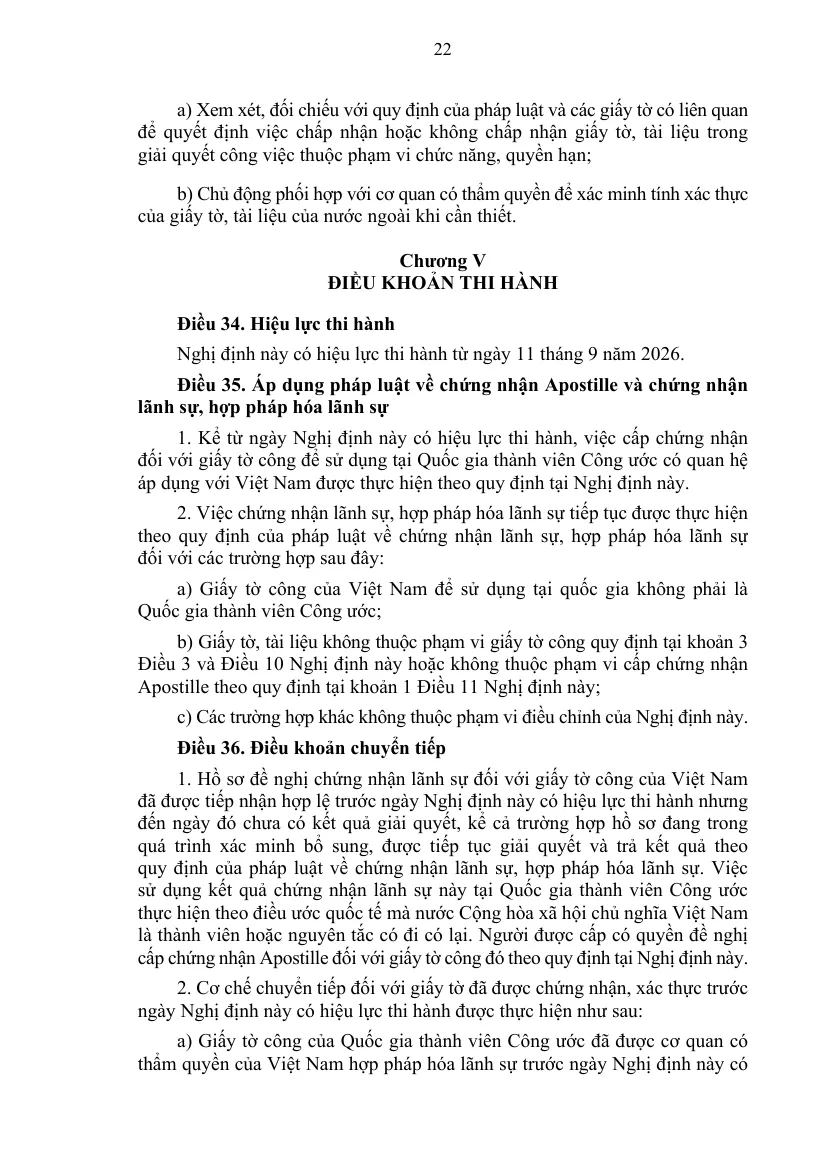
Germany, Austria and the Czech Republic objected to Vietnam’s accession, so the Convention has no effect between Vietnam and them.
A foreign paper coming to Vietnam
A foreign public document with a valid Apostille from a Convention state needs no further certification in Vietnam. No Vietnamese office may ask you for more.
Translate it into Vietnamese and have the translation notarised or certified.
A Vietnamese paper you will use in Vietnam
An Apostille does not replace notarising or certifying that paper at home.
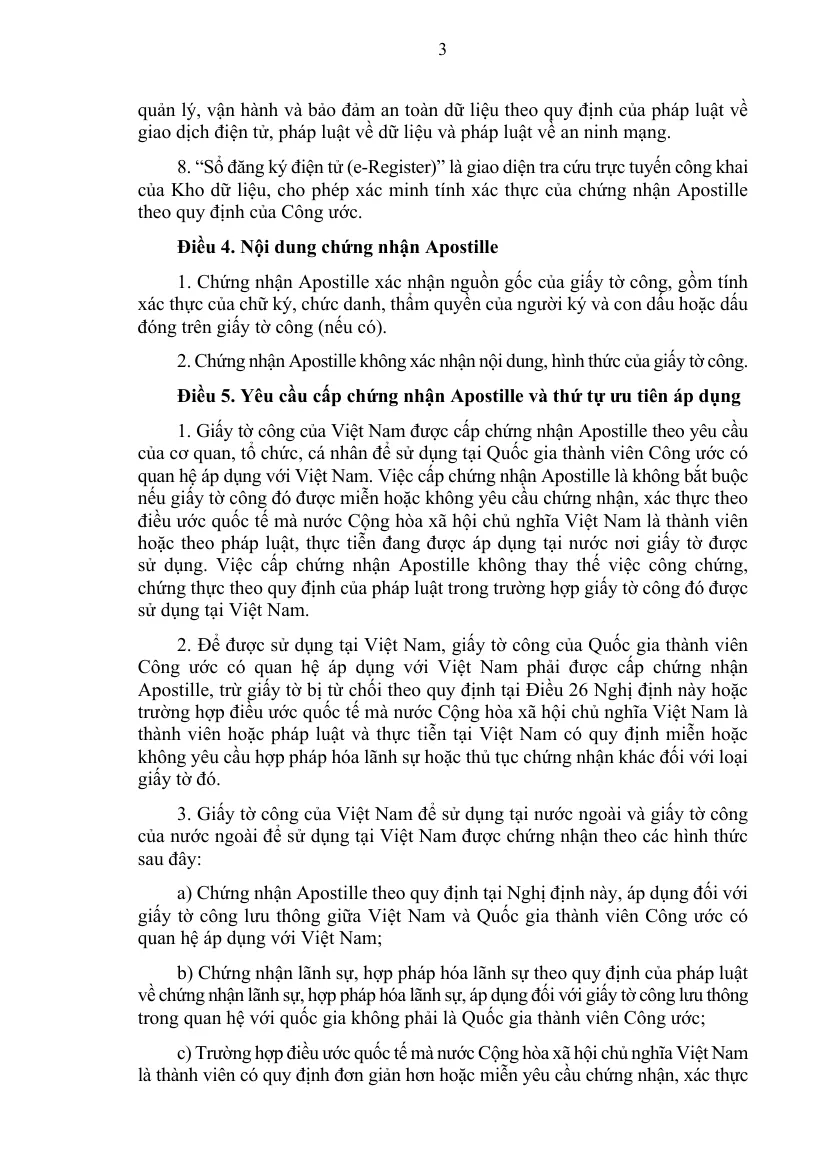
Việc cấp chứng nhận Apostille không thay thế việc công chứng, chứng thực theo quy định của pháp luật trong trường hợp giấy tờ công đó được sử dụng tại Việt Nam.
Issuing an Apostille does not replace notarisation or certification when the Vietnamese public document is to be used in Vietnam.
Apostille decree of 23 July 2026, Điều 5 khoản 1
The Apostille vouches for the signature, the signer’s title and authority and the seal. It says nothing about the content or the form of the document.
Get a Vietnamese document Apostilled in Ho Chi Minh City
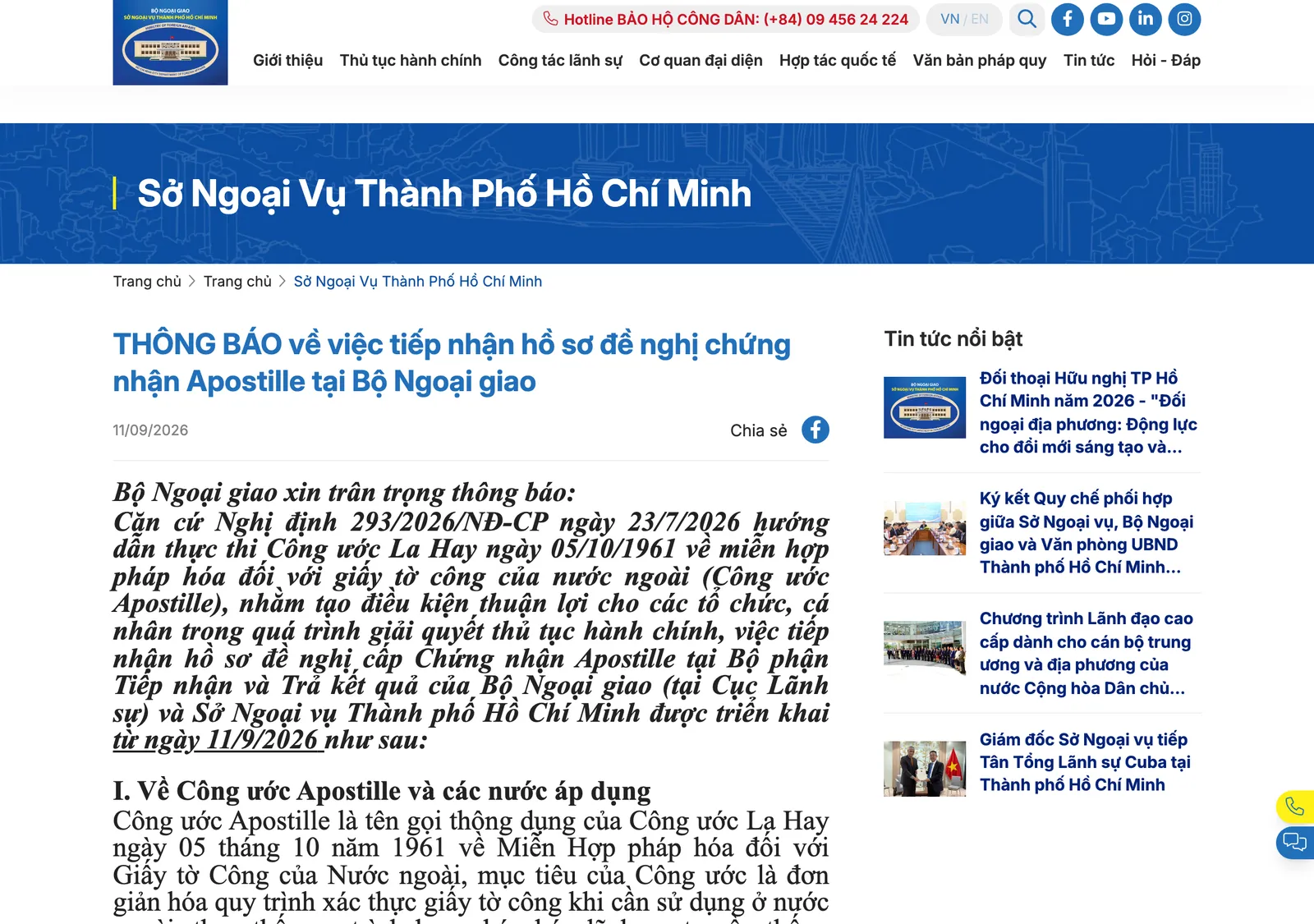
The Department of Foreign Affairs takes Apostille files at 6 Alexandre de Rhodes, Sai Gon Ward. File at counter 5 and collect at counter 9.
6 Alexandre de Rhodes, Sai Gon, Ho Chi Minh, Vietnam · Open in Google Maps (opens in a new tab)
It receives files and returns results Monday to Friday and on Saturday morning, except public holidays. The hours are 8:30 to 11:00 and 14:00 to 16:00.
Steps
- Get the original public document, or a certified copy or certified translation of it. If you file a copy or a translation, that is what the office stamps.
- Keep the paper intact: no detaching, erasing or altering.
- Fill in form APO/TK and upload scans of the documents on the national public service portal or the Ministry’s system. Bring the same papers to the counter.
- Take the file to counter 5. Anyone can file for you without a power of attorney.
- Pay VND 30,000 per document by bank transfer, using the QR code on your receipt.
- Collect at counter 9 when the slip says.
How many days
- 1 working day for a file of 1 to 4 documents.
- 2 working days for 5 to 9 documents.
- 4 working days for 10 or more documents.
If the file is incomplete, the office tells you once what to add. You then have 7 working days, and that time does not count toward the processing time. A document the office must check with the issuing agency takes longer: the agency has 5 working days to answer, up to 10 in complex cases.
Which Vietnamese papers qualify
Civil-status papers, criminal-record certificates, diplomas, study records and health certificates all qualify. So do notarised documents, notarised translations and notarised copies. Certified copies and certified translators’ signatures qualify too.
The office refuses a paper that has been erased or altered without authority, or that there is a basis to treat as forged. Papers made by Vietnamese diplomatic or consular officers, and administrative papers directly tied to commerce or customs, are outside the scope.
Online filing
Right now you file in two parts: the form and scans go online, and you hand the papers in at counter 5. You get a paper Apostille. Fully online filing (national portal or national ID app, with a digital signature) opens when the Apostille system goes live. So do electronic Apostilles and QR codes.
Support: dichvucong.mofa.gov.vn and the Department on (84-8) 38224224.
Which countries still need legalisation
On 11 September 2026, 125 member states apply the Convention with Vietnam. Here are 14 you are most likely to need. Any other state on the 125 list works like the Apostille rows:
| Country | Route |
|---|---|
| United States | Apostille |
| United Kingdom | Apostille |
| Australia | Apostille |
| Canada | Apostille |
| Japan | Apostille |
| South Korea | Apostille |
| China | Apostille |
| Russia | Apostille |
| France | Apostille |
| India | Apostille |
| New Zealand | Apostille |
| Germany | Legalisation (objected on 20 May 2026) |
| Austria | Legalisation |
| Czech Republic | Legalisation |
Thailand acceded on 30 June 2026, but the Convention takes effect with Thailand on 28 February 2027. Until then legalisation continues for Thai papers.
For the legalisation countries the old chain stays. A Vietnamese paper is certified at the Department of Foreign Affairs first. Then it goes to the receiving country’s embassy or consulate in Vietnam.
The Department charges VND 30,000 per document for legalisation. Ask the embassy for its fee and appointment rules before you go. That end is where the cost and the weeks pile up.
Greenland is left out too: the Convention applies in the Faroe Islands but not in Greenland.
If your country is not in the table, check it on the official list of the 125 states (opens in a new tab) before you pay for anything. Some members issue Apostilles by territory: Hong Kong and Macao for China, the UK overseas territories, four Dutch regions. Name the place where your paper was issued, not only the country. Papers going to or from any state outside the Convention follow legalisation.
Use a foreign document in Vietnam
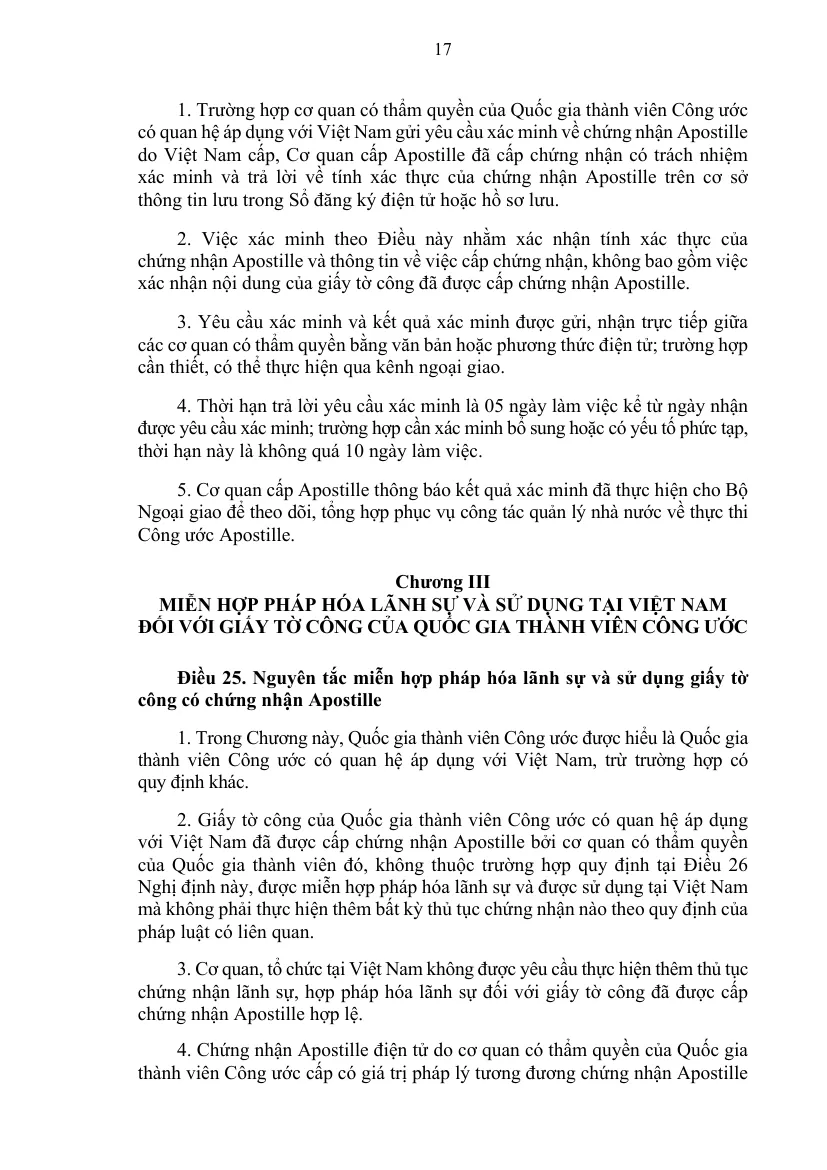
Get the Apostille in the country that issued the paper. A foreign public document with a valid Apostille is exempt from consular legalisation.
An office in Vietnam can check your Apostille online in the issuing state’s register, or by scanning the QR code on it. A paper not in Vietnamese must then be translated, and the translation notarised or certified under Vietnamese law.
Without an Apostille the rule is the old one. Foreign documents must be consularly legalised to be recognised and used in Vietnam, except in the cases the legalisation decree lists.
An exemption applies when:
- a treaty Vietnam has joined, or reciprocity, exempts the paper;
- the paper is passed directly or through diplomatic channels between competent authorities of the two countries;
- Vietnamese law exempts it;
- a competent Vietnamese state agency can establish a foreign document’s authenticity itself and does not require legalisation.
A foreign document legalised before 11 September 2026 stays valid. A Vietnamese document certified earlier can get an Apostille for a Convention state without being reissued.
Papers for registering a marriage or a birth
For civil-status registration, a foreign-language paper must be translated into Vietnamese. The translation is notarised, or the translator’s signature is certified.
For papers used in marriage and birth files, see marriage registration in Ho Chi Minh City and birth registration.
On 1 March 2027 the new Civil Status Law takes effect. Under it, foreign papers used for civil-status registration must be consularly legalised, unless a treaty Vietnam has joined or Vietnamese law exempts them.
Translations: who can sign and certify
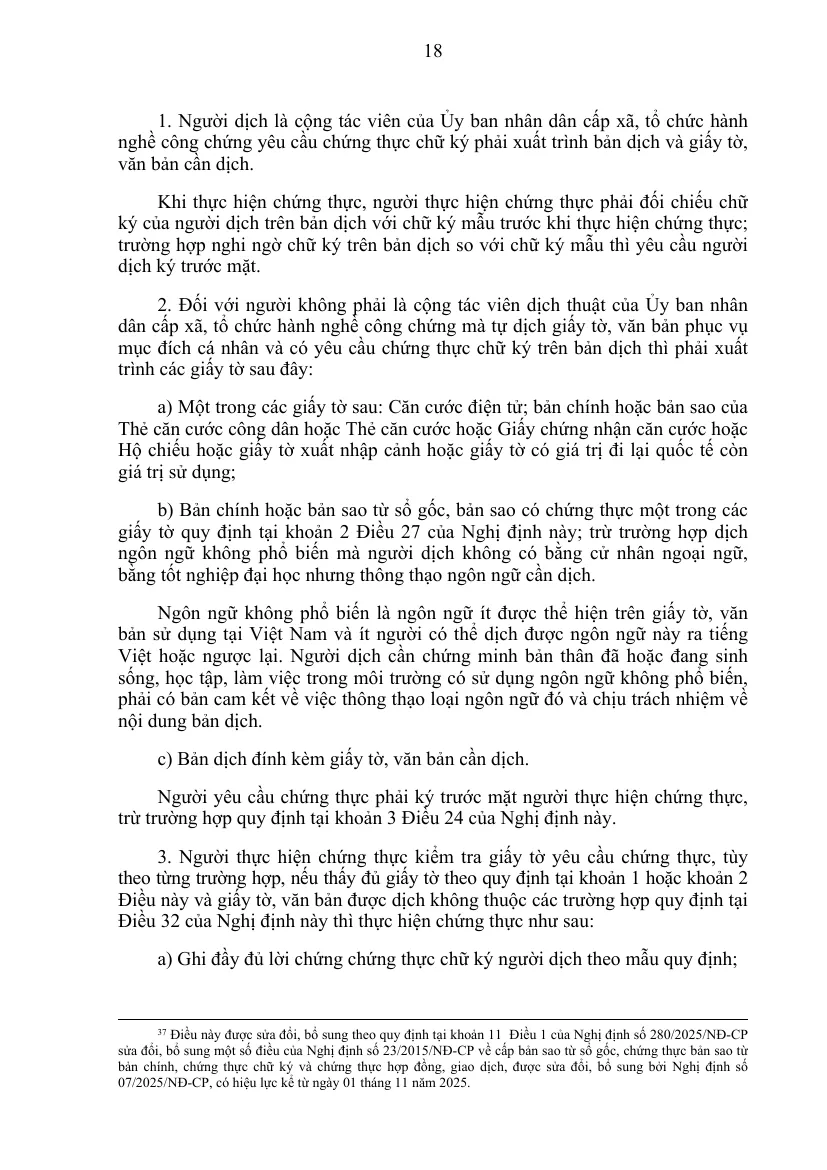
The chair of the ward People’s Committee can certify the signature of a translator working between Vietnamese and a foreign language. A notary has the same power.
A translator who works with the ward or a notary organisation shows the translation and the original paper. The certifier checks the signature against the translator’s registered sample.
If you translate your own papers for personal use, you can still ask for the signature on the translation to be certified. You show a valid passport, an entry-exit document or another travel document.
You also need a degree in the foreign language, or a university degree in it. For an uncommon language, you must be fluent instead.
A translation of two or more pages needs every page numbered and signed by the translator and the certifier. The page count and the certification note go on or right after the last page.
A foreign paper that has not been legalised cannot be translated for signature certification. A paper that carries a valid Apostille is exempt from legalisation instead.
Every notary office has its translators approved by the Department of Justice and posts the list on its wall. The Department is at 141-143 Pasteur, Xuan Hoa Ward.
For driving licences, the translation must have its quality certified by a notarial authority in Vietnam. See driving licence in Ho Chi Minh City.
Certified copies and signatures at your ward
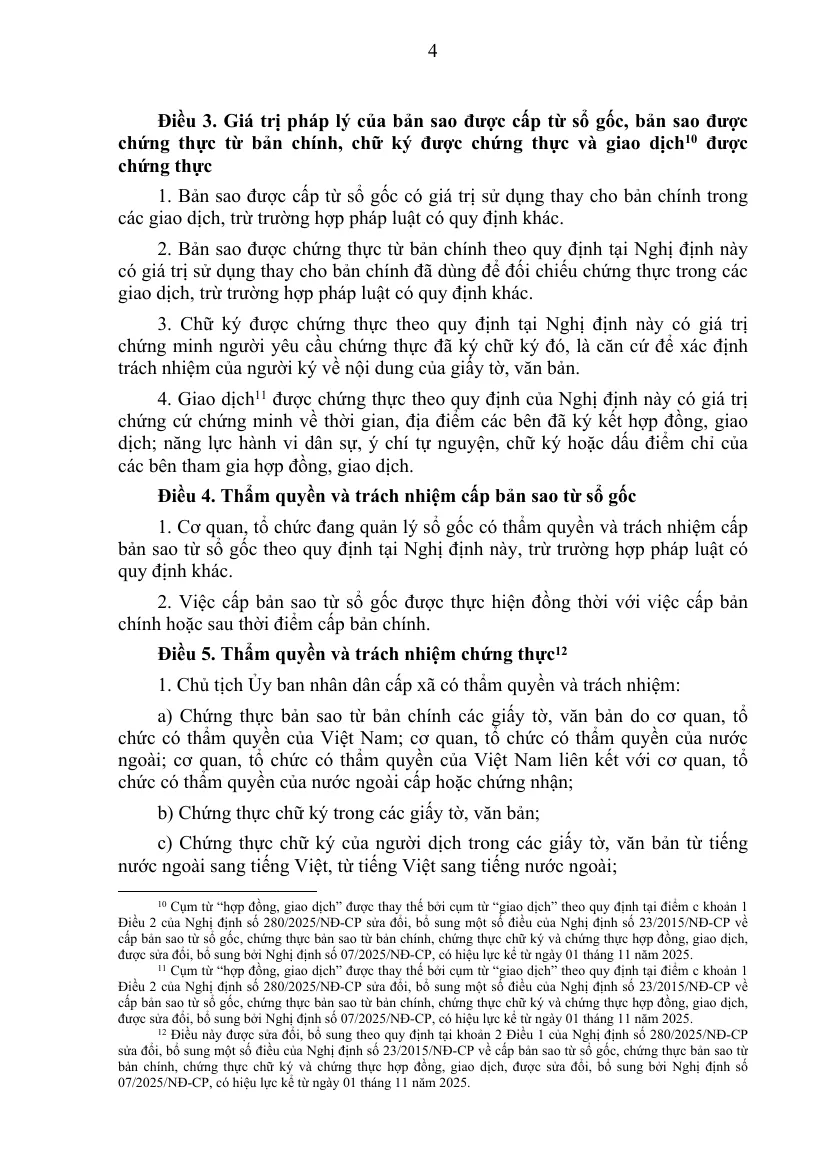
The ward People’s Committee certifies a copy against the original, and a signature on a paper. A notary can do the same.
You can choose the office that is most convenient, except where the land and housing rule applies. Certifying a copy or a signature does not depend on where you live.
A request is finished the same day, or the next working day if you hand it in after 15:00.
To certify a copy of a foreign-issued original, the original must be legalised first, unless a treaty Vietnam has joined or reciprocity exempts it.
Notarisation at a notary office
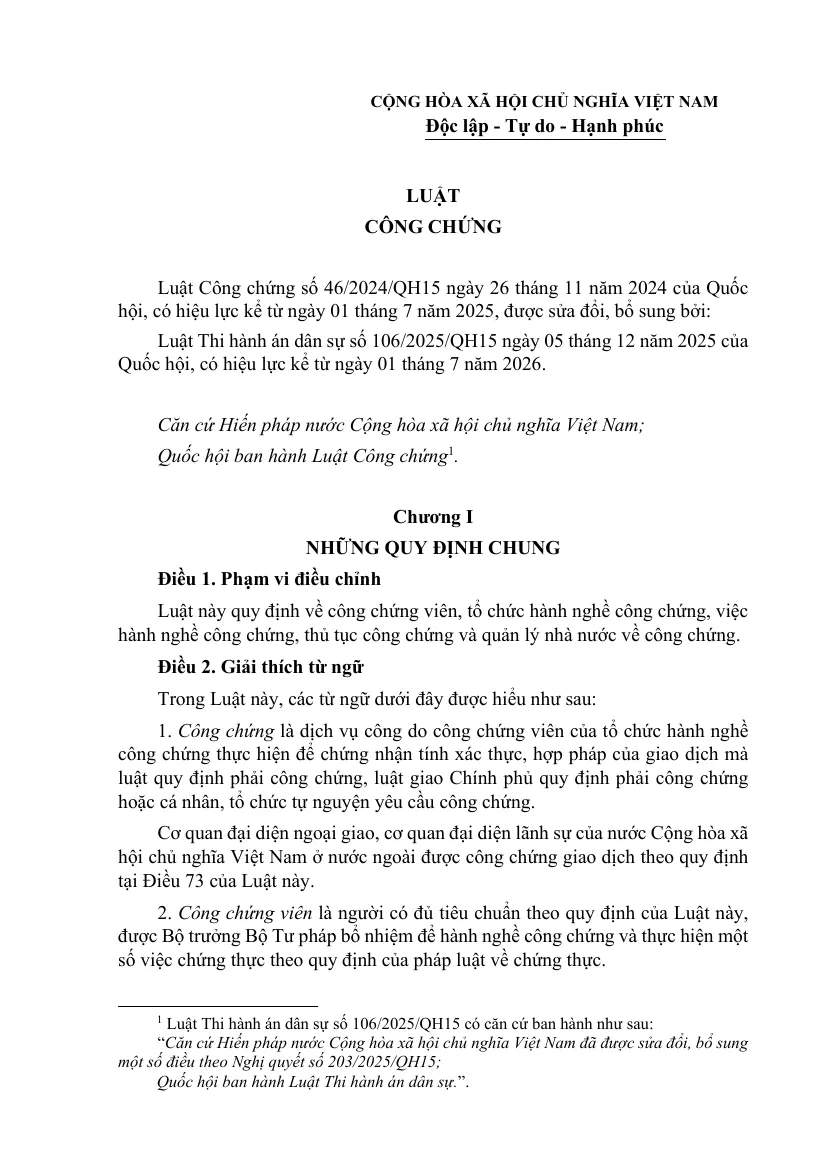
Notarisation is a public service by a notary of a notary organisation. The notary certifies that a transaction is authentic and lawful, whether the law requires notarisation or you ask for it.
A notarial document counts as evidence: its facts need no proof unless a court declares it void. A notary also certifies signatures and translators’ signatures under the certification rules.
Bring ID: a card, a passport or another paper that establishes who you are.
Notarisation runs in Vietnamese. If you do not speak Vietnamese well, you need an interpreter.
Walk into any notary office near you: each posts its schedule, fees and service prices on the wall. Drafting, typing, copying and translating are extra, and the city caps what an office may charge. Ask for the price list before you hand over papers. Notarising outside the office or outside working hours costs extra, by agreement.
Fees and a checklist
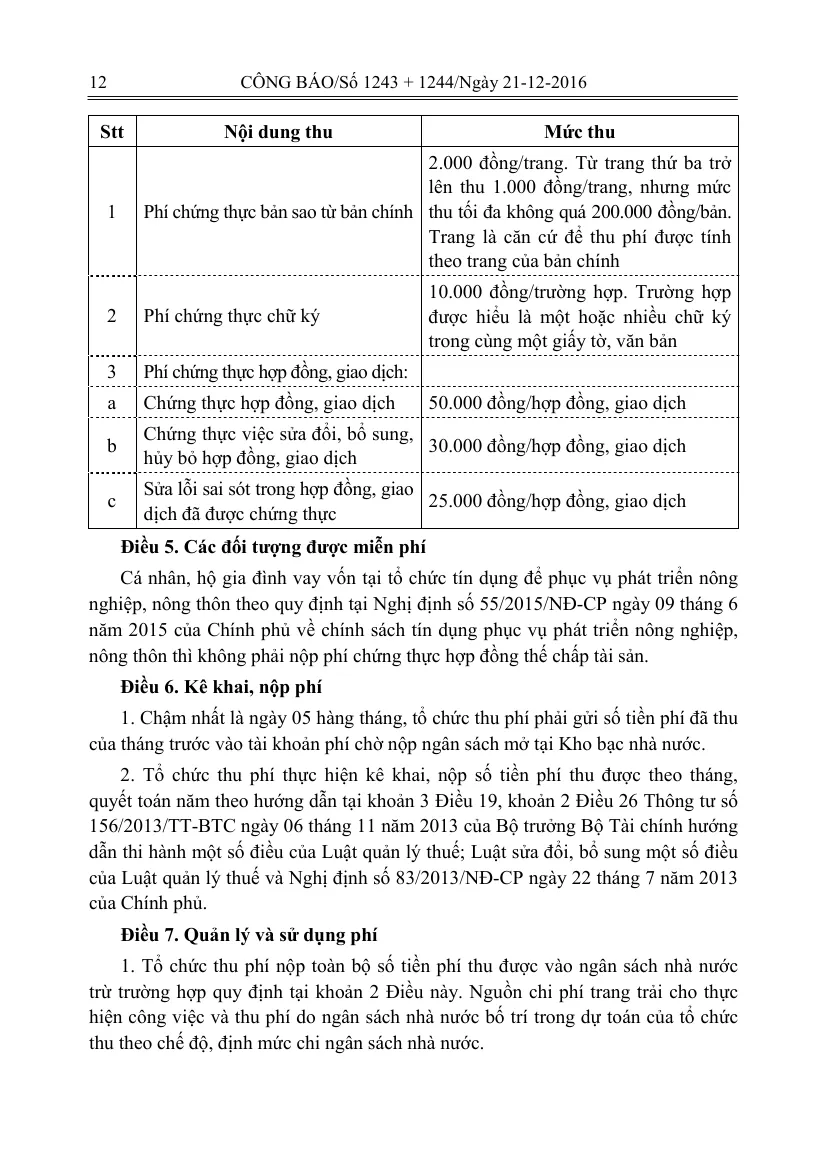
| Service | Fee |
|---|---|
| Apostille at the Department of Foreign Affairs | VND 30,000 per document |
| Certified copy | VND 2,000 per page, VND 1,000 per page from the third page |
| Cap on a certified copy | VND 200,000 per copy |
| Certified signature | VND 10,000 per case |
| Legalisation at the Department (Germany, Austria, Czech Republic) | VND 30,000 per document |
Before you go:
- Work out the destination state against the table above.
- Take the original, or a certified copy or translation, and keep it intact.
- Upload scans with form APO/TK.
- Pay at the counter by QR transfer.
- Allow 1 working day for up to 4 documents.
Step by step
- Choose the stampA Vietnamese paper going to a Convention state needs an Apostille; Germany, Austria, the Czech Republic and non-members need legalisation.
- Prepare the documentUse the original, or a certified copy or certified translation, and keep it intact. If you file a copy, the copy gets the stamp.
- Fill in the form and upload scansFill in form APO/TK online and upload scans on the national public service portal or the Ministry's system.
- File at counter 5Hand the file in at 6 Alexandre de Rhodes, counter 5, in the receiving hours.
- Pay and collectPay VND 30,000 per document by QR transfer. Collect at counter 9 after 1 working day for 1 to 4 documents.
Not confirmed: Whether the office abroad that receives your paper takes an Apostilled certified copy or wants the original: ask that office before you file. The VND 10,000 signature fee may not cover a translator's signature: ask the notary or ward counter for the price first.
Common questions
Can a friend or an agent file my Apostille for me?
Anyone can apply for an Apostille on their own or another person's document without a power of attorney. The person who files for someone else answers for the lawfulness of filing and using the document.
Is a paper legalised before 11 September 2026 still valid?
A foreign document legalised by a Vietnamese authority before that date stays valid in Vietnam, and a receiving office may not make you get an Apostille for it. A Vietnamese document certified earlier can get an Apostille without being reissued.
Does an Apostille replace notarising a document for use in Vietnam?
An Apostille does not replace notarisation or certification when a Vietnamese public document is used in Vietnam.
Can I translate my own papers?
You can ask for the signature on your own translation to be certified if you translate for personal use. You show ID or a passport and a degree in the language, or fluency for an uncommon language.
What does an Apostille prove?
It confirms the signature, the signer's title and authority and the seal. It does not confirm the content or the form of the document.
Which documents does the Department refuse to Apostille?
It refuses a document that is erased or altered without authority, or that there is a basis to treat as forged. Documents made by Vietnamese diplomatic or consular officers are outside the scope.
Can I use a US or UK document in Vietnam with only an Apostille?
The United States and the United Kingdom are among the states that apply the Convention with Vietnam. A valid Apostille means no further certification, but the document still needs a notarised or certified Vietnamese translation.
Can I file the Apostille online?
Half of it. Fill in form APO/TK and upload scans online, then bring the papers to counter 5. The Apostille is issued on paper until the national system goes live. Questions: dichvucong.mofa.gov.vn or (84-8) 38224224.
Read next
General information checked against the sources listed above, not legal advice for your situation. Rules and office practice change; confirm with the immigration office or a licensed adviser before you act. See how guides are checked.
Spotted an error? Report it.