Vietnam E-Visa for Ho Chi Minh City: Apply, Fees and Tan Son Nhat Arrival
Apply on evisa.gov.vn from outside Vietnam. The e-visa is valid up to 90 days, for single or multiple entries. The fee is US$25 for single entry and US$50 for multiple entry. Processing takes no more than 3 working days. At Tan Son Nhat, present the e-visa to the immigration officers.
On this page
At the Tan Son Nhat counter
At the border you must present valid residence documents, such as an electronic visa, to the immigration officers. Have the e-visa ready, and your pre-arrival QR code if you filed one.
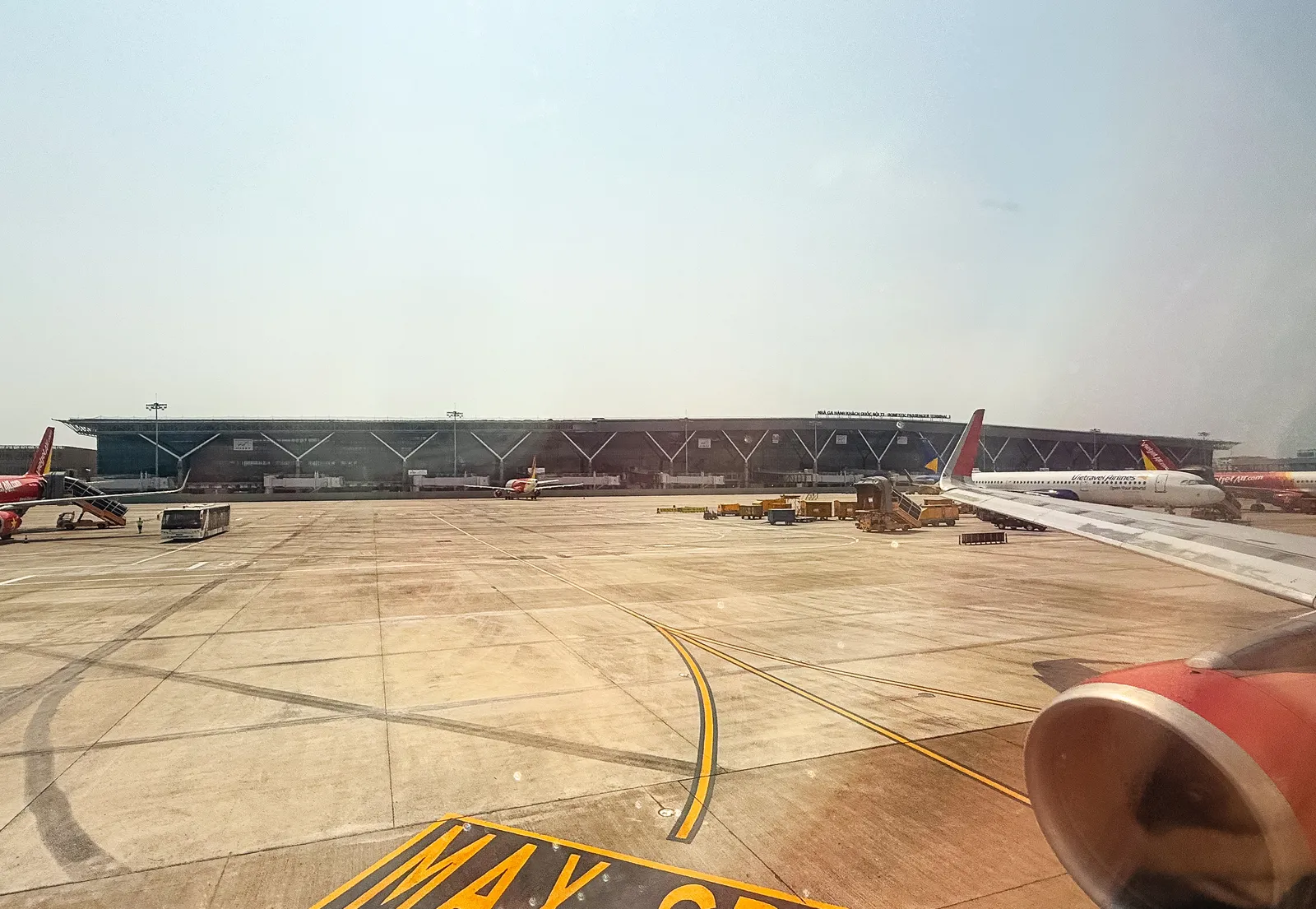
Tan Son Nhat Airport is on the e-visa portal’s list of air border gates. If you filed the pre-arrival declaration, the immigration authority carries out the entry procedures in advance, so you do not queue for them on arrival.
Do you need an e-visa?
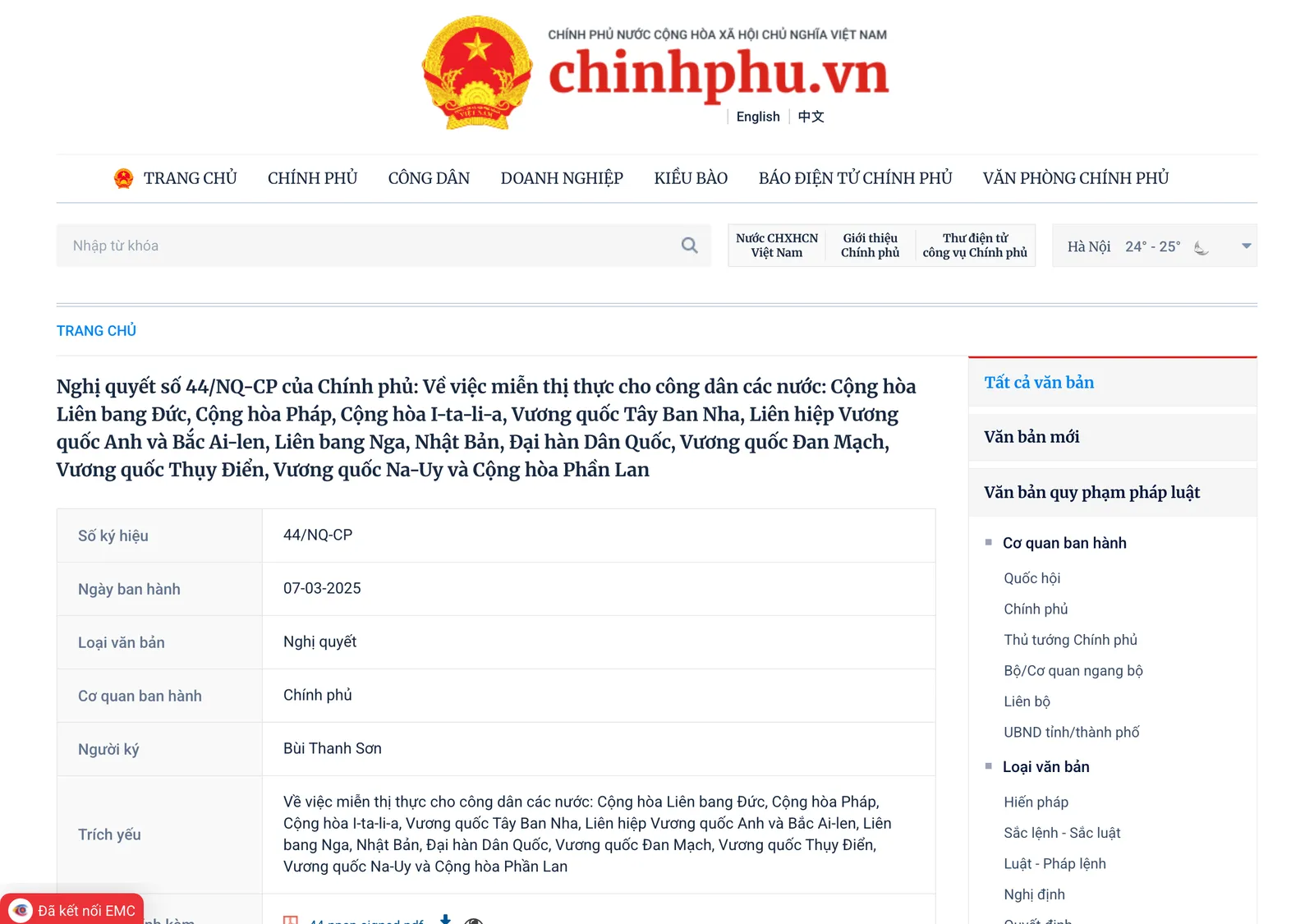
Resolution 44/NQ-CP gives citizens of the countries it names 45 days from entry, for any passport type and any purpose. It applies to entries from 15 March 2025 through the end of 14 March 2028.
Resolution 229/NQ-CP gives citizens of the countries it names 45 days from entry, for tourism only. It applies from 15 August 2025 through the end of 14 August 2028. The country lists are in what changed in 2026 and the visa exemption guide.
Otherwise an e-visa is granted to a foreigner holding a passport who is outside the top state-guest categories of Article 8. It is granted to citizens of all countries and territories. For other symbols, see the Vietnam visa types guide.
Apply on the official portal
Apply at evisa.gov.vn or thithucdientu.gov.vn. The portal warns that unofficial pages may charge unauthorized fees.
- Confirm you are outside Vietnam. E-visas are issued to foreigners who wish to enter Vietnam, not to those already residing there.
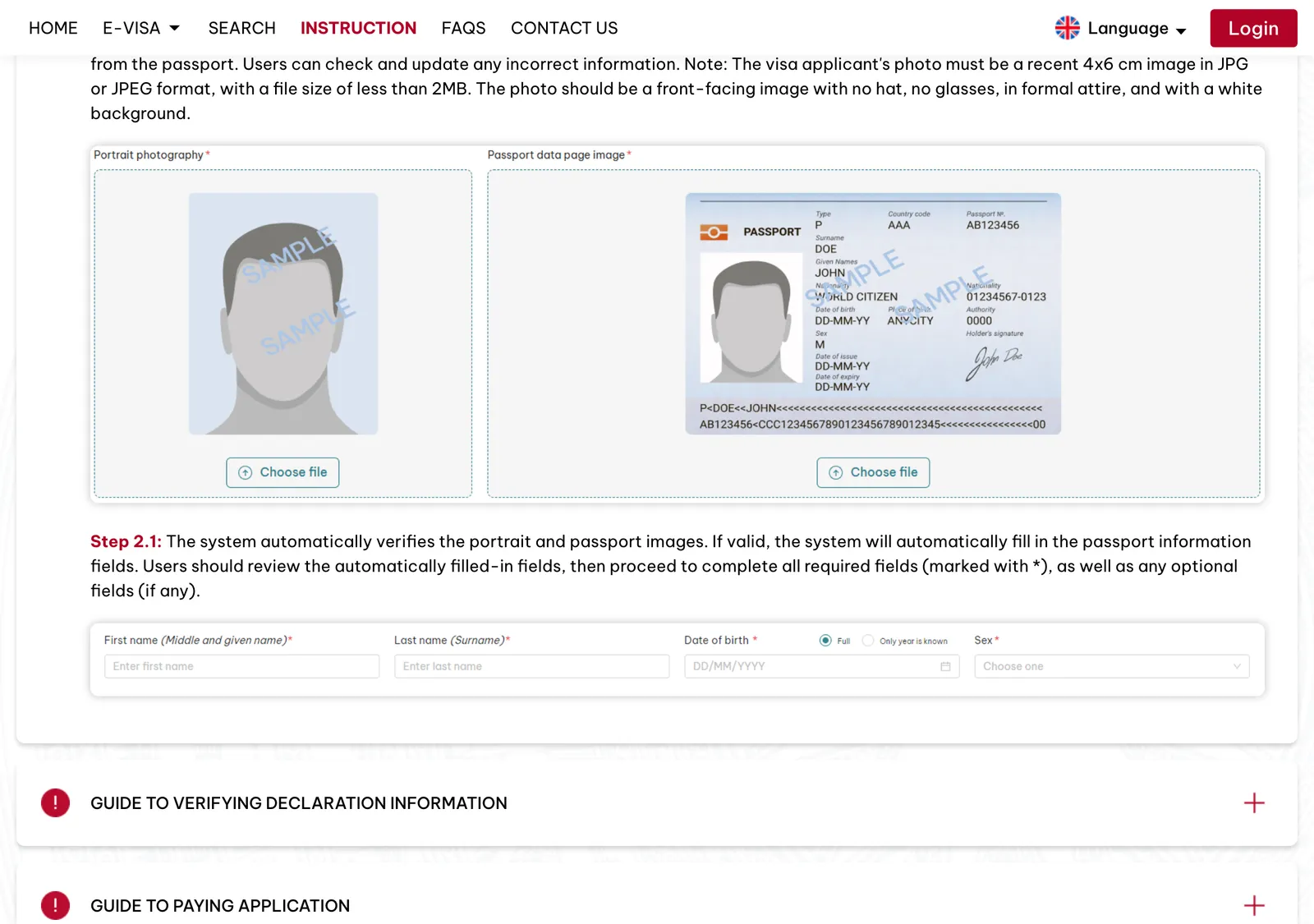
- Upload a recent 4x6 cm photo in JPG or JPEG format, under 2MB.
- Fill in the declaration in English, fully, accurately and honestly. Write your full name exactly as on the ICAO line of your passport, in uppercase.
- Pay the fee online. Enter credit or debit card details, then verify with an OTP.
- Wait for the result, which takes no more than 3 working days from a complete application and the fee.
An application is denied if the Immigration authority finds any dishonest information in it.
If you plan to stay at several places, declare the first address in the application. You may apply up to 1 year before your planned entry.
Fee, validity and processing time
| Item | Official figure |
|---|---|
| Validity | Up to 90 days, single or multiple entries |
| Single-entry fee | US$25 |
| Multiple-entry fee | US$50 |
| Processing, filed online | No more than 3 working days |
| Earliest application | Up to 1 year before entry |
| Payment | Credit or debit card, then OTP |
The fee is paid through the portal’s e-payment gateway and is not refunded if the visa is refused. By law an e-visa cannot exceed 90 days, and it must end at least 30 days before the passport expires.
Border gates near Ho Chi Minh City
E-visa holders may only enter and exit through the international border gates the Government designates. You may leave through a different gate from the one you entered by.
- Air: Tan Son Nhat Airport.
- Sea: Ho Chi Minh City Port.
- Land: the Moc Bai international border gate, in Tay Ninh province.
The portal’s air list names 15 gates and its sea list names 39. Resolution 389/NQ-CP, signed on 2 December 2025, added more gates. It adds Long Thanh International Airport once the airport is put into operation. Fees for other visas are in Vietnam immigration fees.

Truong Son, Tan Son Hoa, Ho Chi Minh 705000, Vietnam · Open in Google Maps (opens in a new tab)
The pre-arrival declaration at Tan Son Nhat
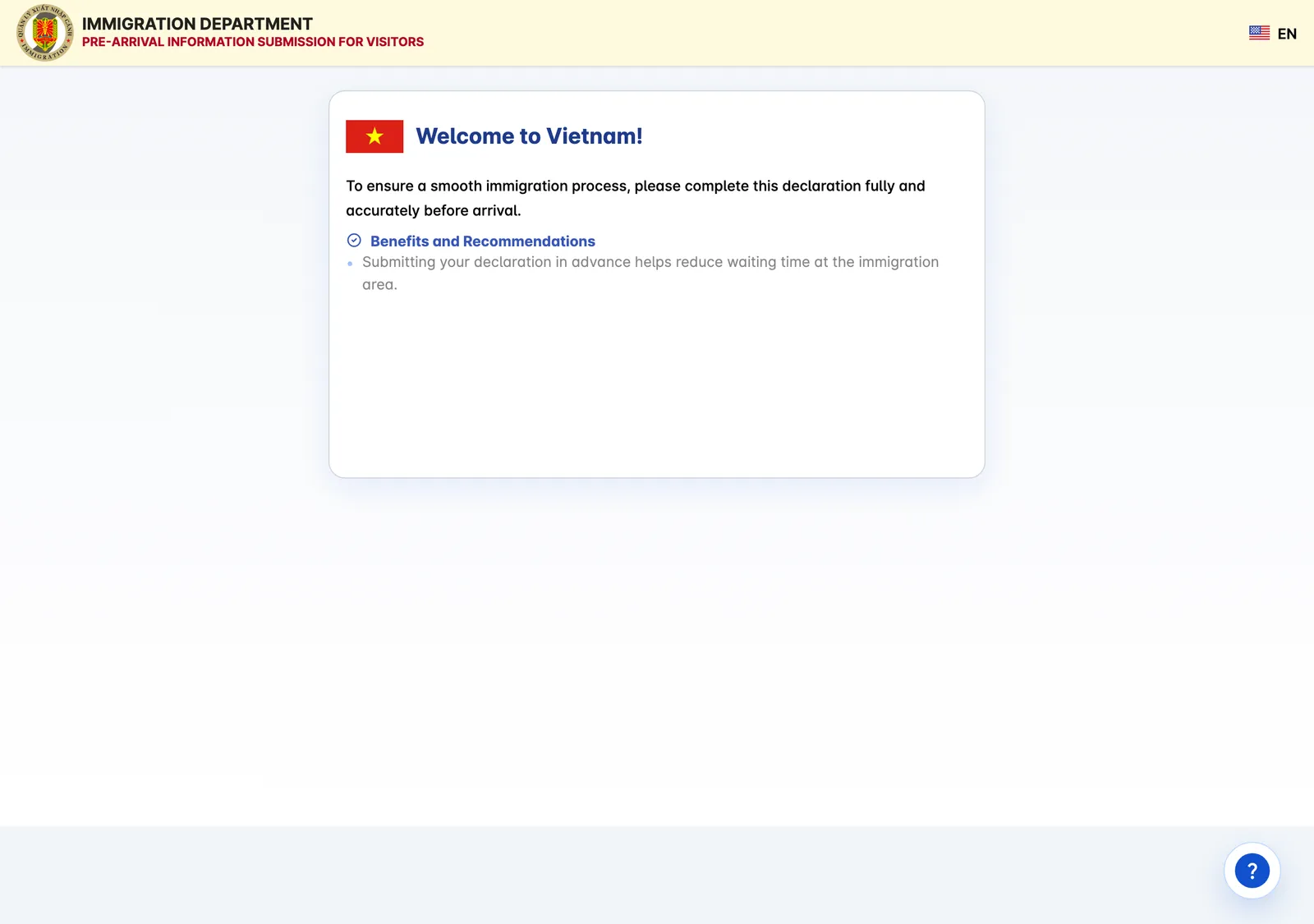
The Immigration Department piloted the Pre-arrival Information (PAI) System for foreign nationals at Tan Son Nhat International Airport from 15 April 2026. You can submit from any internet-connected device within three days before entry.
A notice dated 18 June 2026 on a Vietnamese embassy site says the pilot is encouraged, not compulsory. A U.S. Embassy notice dated 17 June 2026 calls the declaration mandatory for all international passengers without a Vietnamese passport. The notices disagree, so file it either way.
If you arrive without it, the U.S. Embassy notice says the declaration is also available on arrival by QR code or paper form. The system is for travel information, not for visa applications.
The steps are on the official site. At the end the system generates a QR code. Save it on your phone or print it for use at border gates.
Some declarations fail because of mistakes with the flight number and the Passenger Name Record data. Authorities found fake websites impersonating the system. Go to prearrival.immigration.gov.vn.
After you land: declare your stay
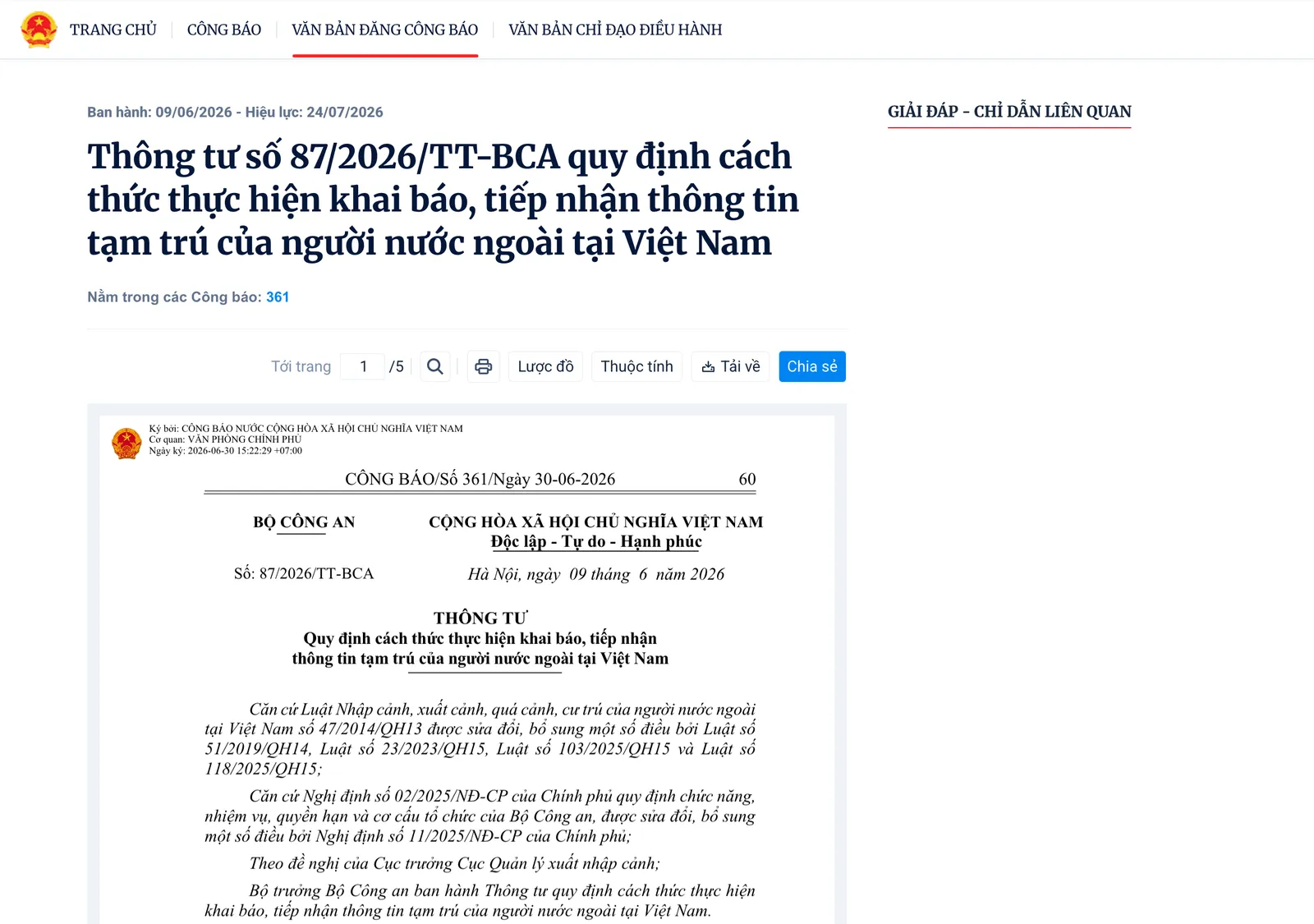
A foreigner temporarily residing in Vietnam must declare that residence through the person who directly manages or runs the accommodation. Circular 87/2026/TT-BCA has applied since 24 July 2026 and replaces Circular 53/2016/TT-BCA. An electronic declaration must be filed the moment you arrive at the accommodation.
If you stay at several places, you go through the manager of each accommodation, again at every change of place. The accommodation asks you to present your passport and residence papers before it agrees to host you.
Extending, converting and overstaying
E-visa holders in Vietnam may be considered for a new visa if an authority, organisation or individual in Vietnam invites or guarantees them. That is a new visa, not an extension of the e-visa.

An e-visa is not a work visa: foreigners working in Vietnam must have a work permit or a confirmation that they do not need one. A holder who entered on an e-visa and holds a work permit, or a confirmation of exemption from one, may convert the visa’s purpose.
For an individual the bands run from 500,000 to 2,000,000 VND for under 16 days up to 30,000,000 to 40,000,000 VND for 1 year or more. The full table is in the overstay fines guide.
Deportation may be added for an overstay of 16 days or more. To extend a stay, see the extension guide. For long stays, see temporary residence cards and registering your stay. The visa hub lists every guide.
Step by step
- Check that you qualifyYou must hold a passport and be outside Vietnam. Foreigners in the top state-guest categories apply through an inviting agency instead.
- Open the official portalGo to evisa.gov.vn or thithucdientu.gov.vn.
- Upload your photoUse a recent 4x6 cm image in JPG or JPEG format, under 2MB.
- Fill in the declaration in EnglishGive your full name exactly as on the passport ICAO line, in uppercase. Declare all information in English.
- Pay the fee onlineThe fee is US$25 for single entry and US$50 for multiple entry. Enter card details and verify with an OTP.
- Wait for the resultProcessing takes no more than 3 working days from a complete application and the fee.
- Submit the pre-arrival declarationFile on prearrival.immigration.gov.vn within three days before entry, and keep the QR code. A Vietnamese notice of 18 June 2026 calls it encouraged, not compulsory.
- Show the e-visa at immigrationPresent your e-visa to the immigration officers at the border.
Not confirmed: Whether the pre-arrival declaration is compulsory. A Vietnamese embassy notice of 18 June 2026 says encouraged, not compulsory. A U.S. Embassy notice of 17 June 2026 says mandatory.
Common questions
Can I apply for a Vietnam e-visa while I am in Vietnam?
E-visas are issued to foreigners who wish to enter Vietnam, not to those already residing in Vietnam. After you depart and exit Vietnam, you may request one.
Can I use an e-visa at Tan Son Nhat Airport?
Tan Son Nhat Airport is on the portal's list of air border gates open to e-visa holders. E-visa holders enter and exit through the international border gates the Government designates.
How early can I apply?
You may submit an application up to 1 year before the planned entry date.
Do I have to leave through the same airport I entered?
An e-visa holder is not required to exit through the same border gate used to enter. Both gates are on the designated list.
Is the pre-arrival declaration part of the visa?
The pre-arrival system gives travel information and is not used to receive or process visa applications. It is a separate step on prearrival.immigration.gov.vn.
Can I extend an e-visa inside Vietnam?
E-visa holders in Vietnam may be considered for a new visa if an authority, organisation or individual in Vietnam invites or guarantees them. That is a new visa, not an extension of the e-visa itself.
Which website is the official one?
The e-visa information page is at evisa.gov.vn and thithucdientu.gov.vn. Unofficial pages may charge unauthorized fees.
Read next
Places in this guide
General information checked against the sources listed above, not legal advice for your situation. Rules and office practice change; confirm with the immigration office or a licensed adviser before you act. See how guides are checked.
Spotted an error? Report it.